Finance
Swiss Finance: Energy, Wages and Local Reality
Swiss inflation is accelerating due to energy and real wages are stagnating while the local economic map changes.
Carousel slides


Use the arrows, your keyboard or swipe. Tap a slide to enlarge it and read it better.
The key facts and their sources
Twint allows paying QR directly in the app. This speeds up cash flow for companies like Planzer and reduces friction for users, modernizing domestic liquidity.
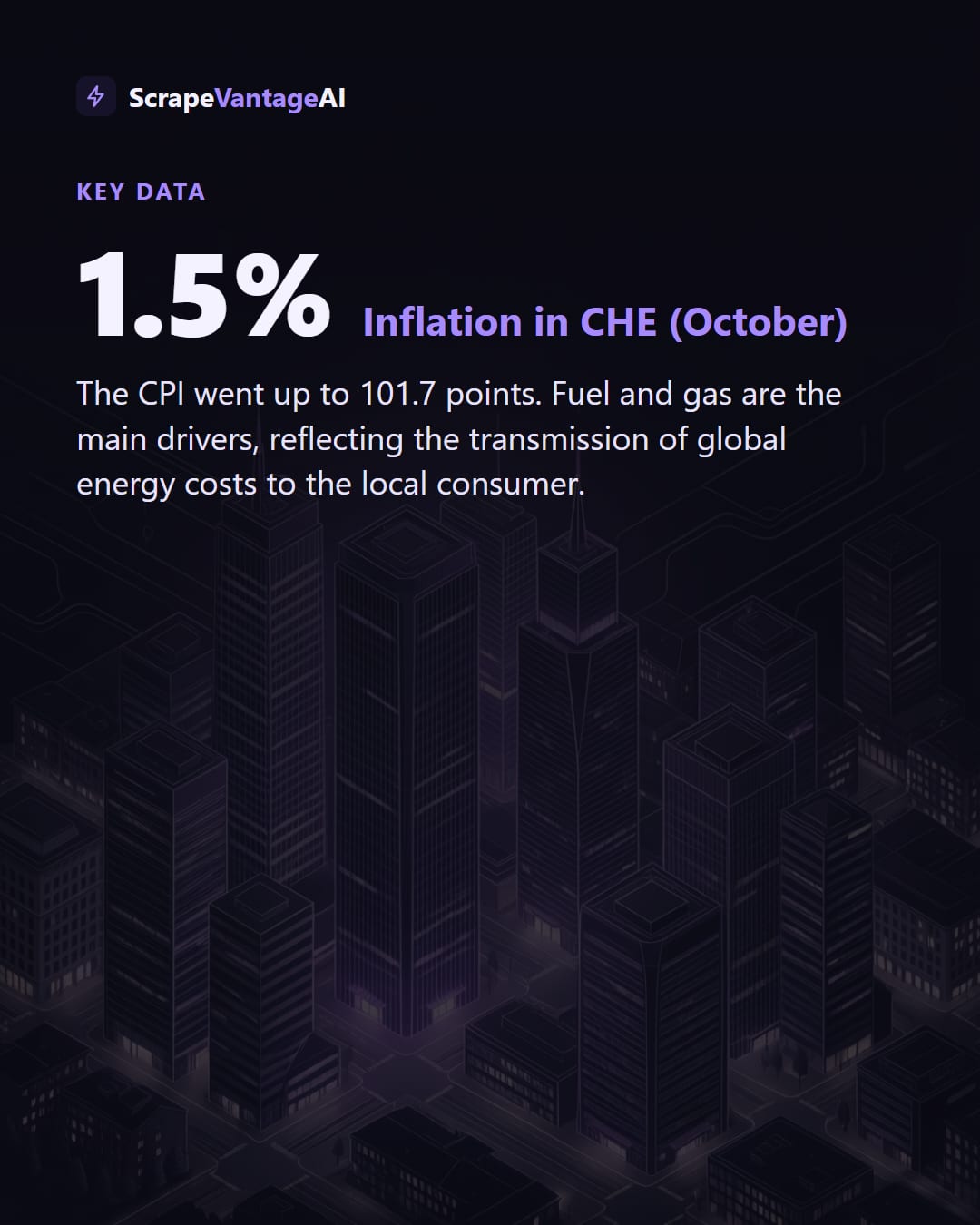
20 Minuten · Nov 5, 2026Dig deeper →The CPI went up to 101.7 points. Fuel and gas are the main drivers, reflecting the transmission of global energy costs to the local consumer.
20 Minuten · Nov 4, 2026Dig deeper →European gas is ten times higher than the US price, making local production more expensive. Also, winter raises the demand for heating and fuel.
20 Minuten · Nov 6, 2026Dig deeper →The president of the SNB, Martin Schlegel, warns about inflationary risks. The central bank is evaluating raising rates given growth driven by pharmaceuticals and chemicals.
Blick · Nov 6, 2026Dig deeper →The Lake Geneva region generated 190 billion CHF compared to Zurich's 167. The departure of Vontobel and Cembra weakens the traditional Swiss engine.
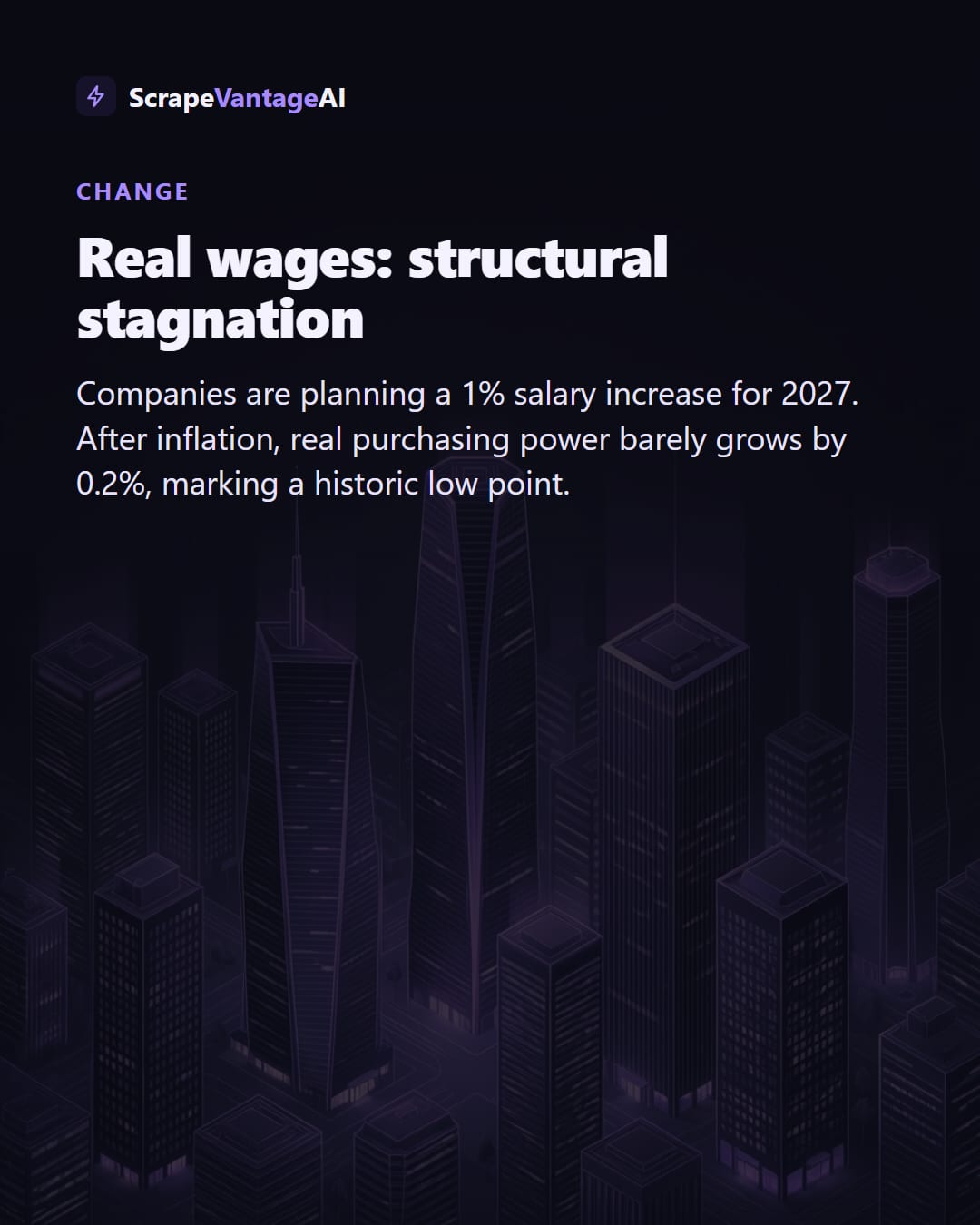
Blick · Nov 3, 2026Dig deeper →Companies are planning a 1% salary increase for 2027. After inflation, real purchasing power barely grows by 0.2%, marking a historic low point.
20 Minuten · Nov 4, 2026Dig deeper →
Companies to monitor
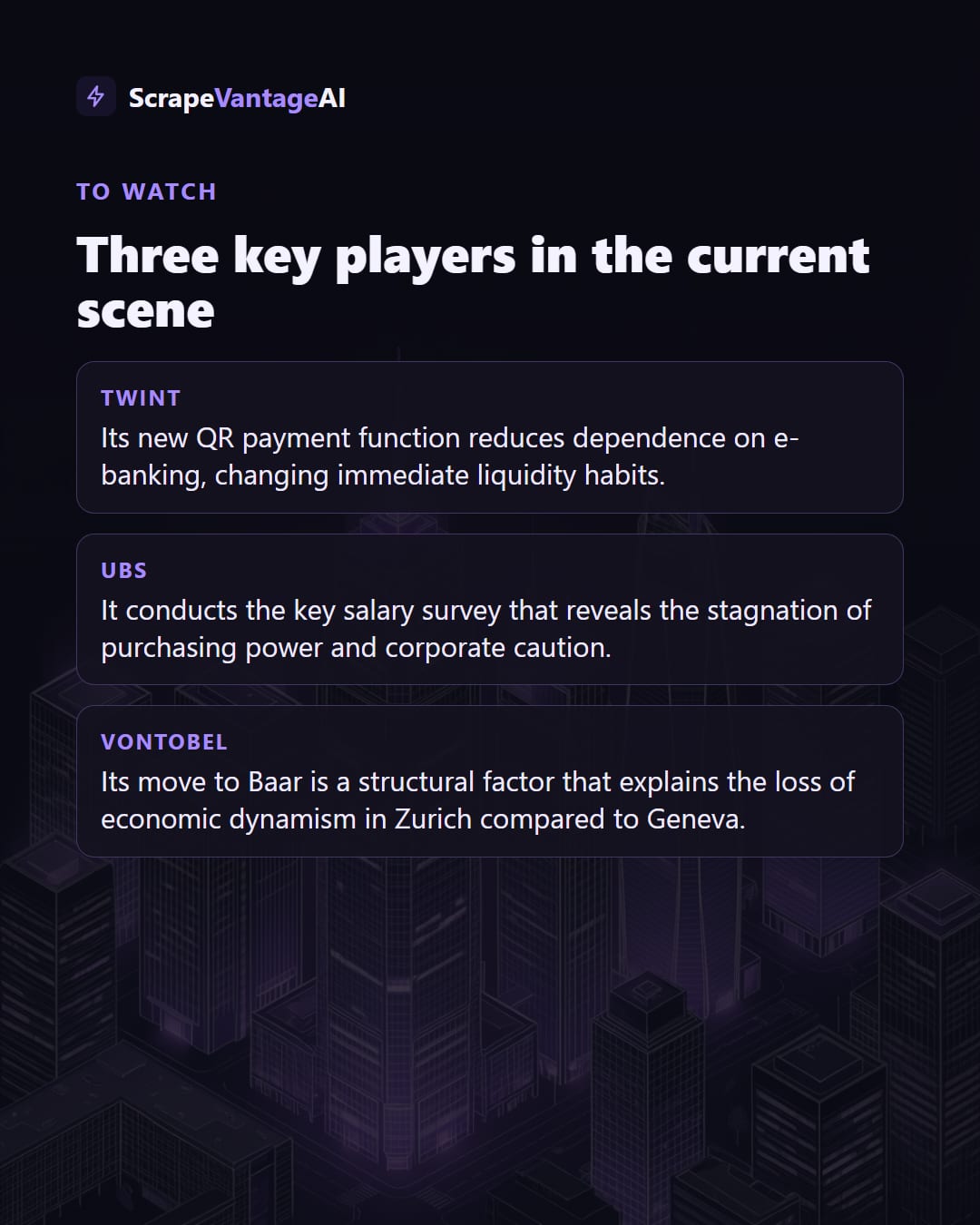
- Twint
Its new QR payment function reduces dependence on e-banking, changing immediate liquidity habits.
Research company → - UBS
It conducts the key salary survey that reveals the stagnation of purchasing power and corporate caution.
Research company → - Vontobel
Its move to Baar is a structural factor that explains the loss of economic dynamism in Zurich compared to Geneva.
Research company →
Our take · what to do
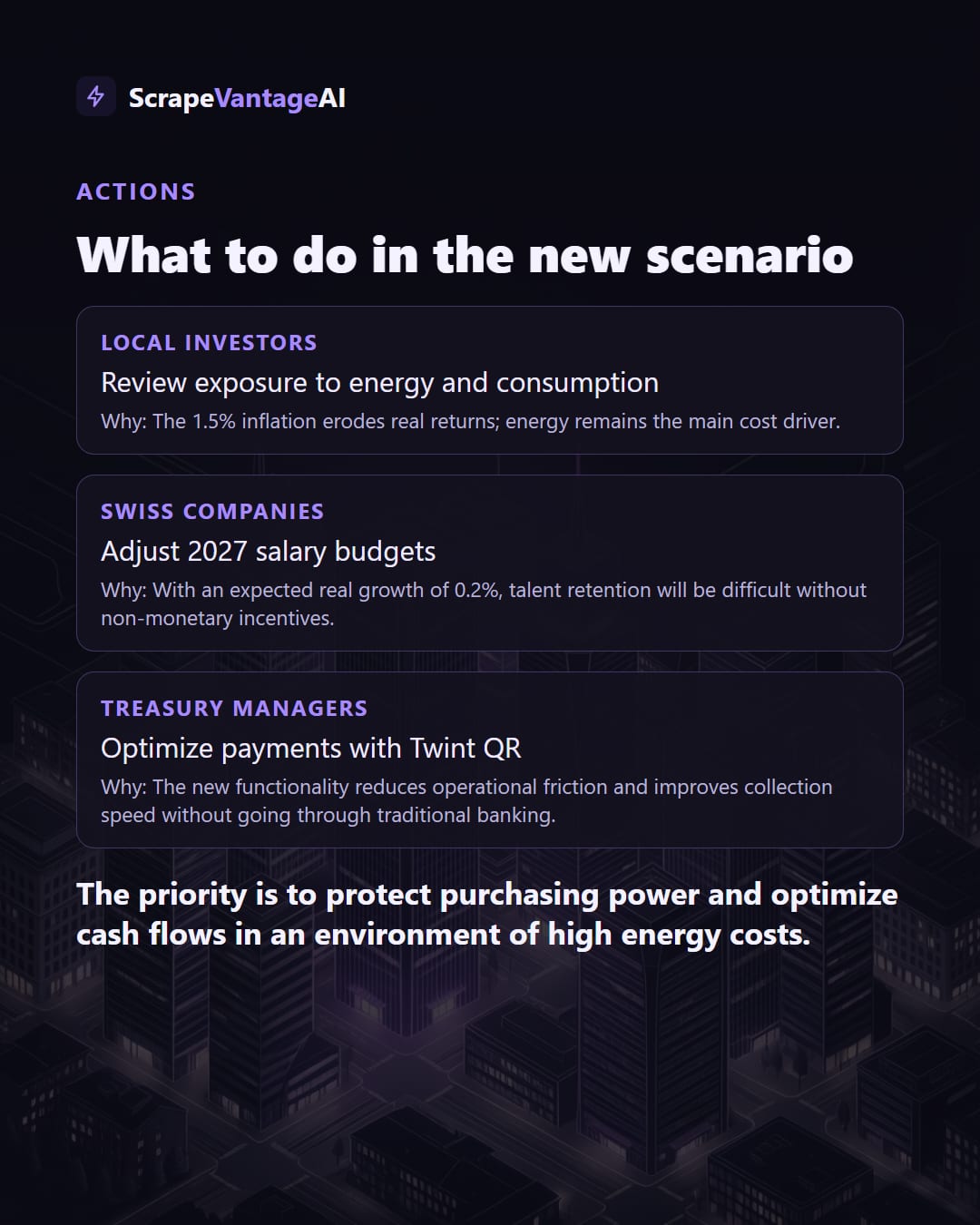
- Local investors
Review exposure to energy and consumption
- Swiss companies
Adjust 2027 salary budgets
- Treasury managers
Optimize payments with Twint QR
Create your account: welcome credits to dig into every fact with your assistant.