COL Finance: Fiscal Crisis, Inflation, and the Battle of the Giants
1 / 10
Use the arrows, your keyboard or swipe. Tap a slide to enlarge it and read it better.
The key signal
The tension between the fiscal crisis, persistent inflation, and financial consolidation defines the week.
The key facts and their sources
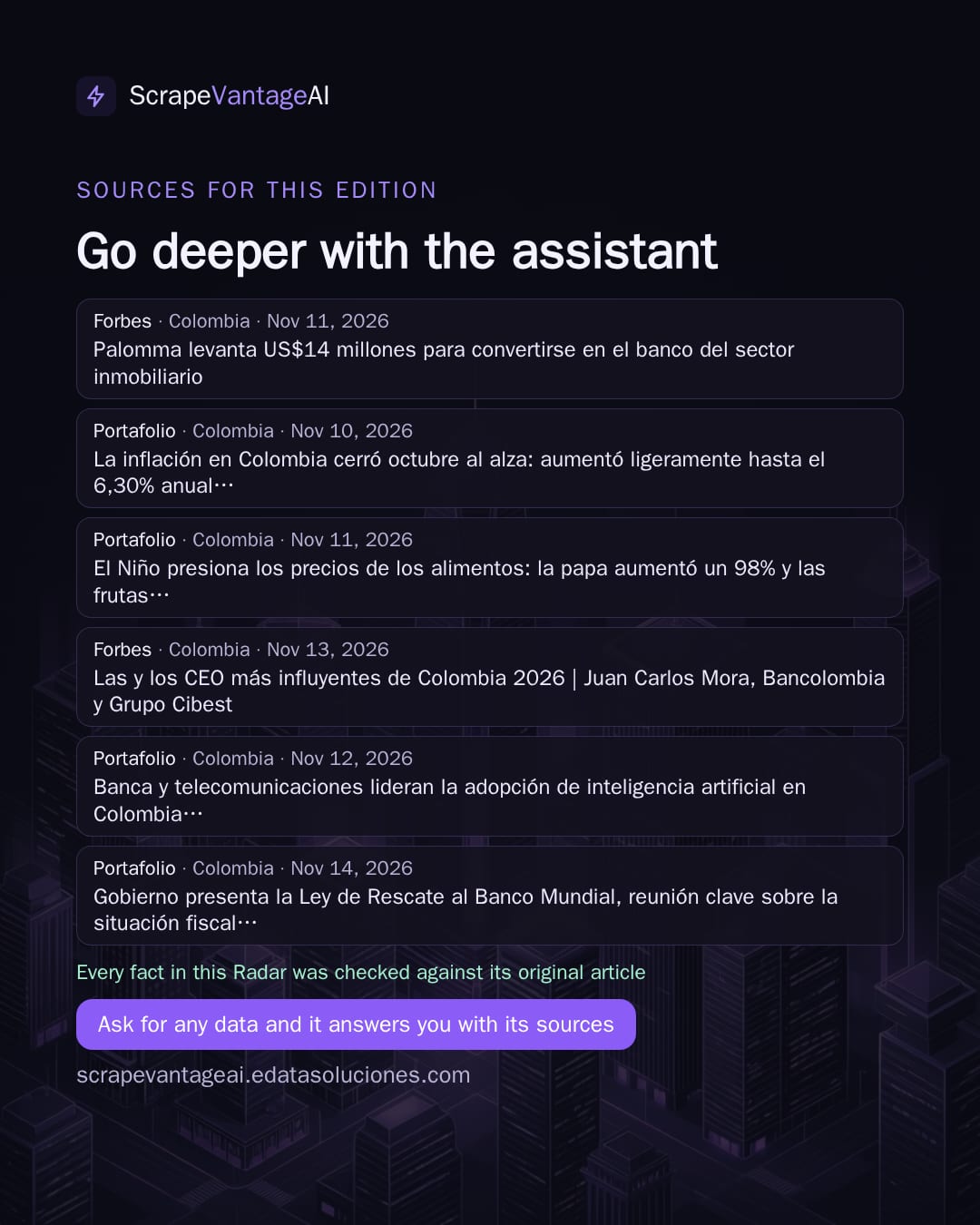
Palomma raises US$14 million to consolidate itself as the bank of the real estate sector, led by Cometa. This fintech processes $1.5 billion annually in rent payments and seeks to expand its financial services in the region, breaking into a market dominated by traditional banking through artificial intelligence.
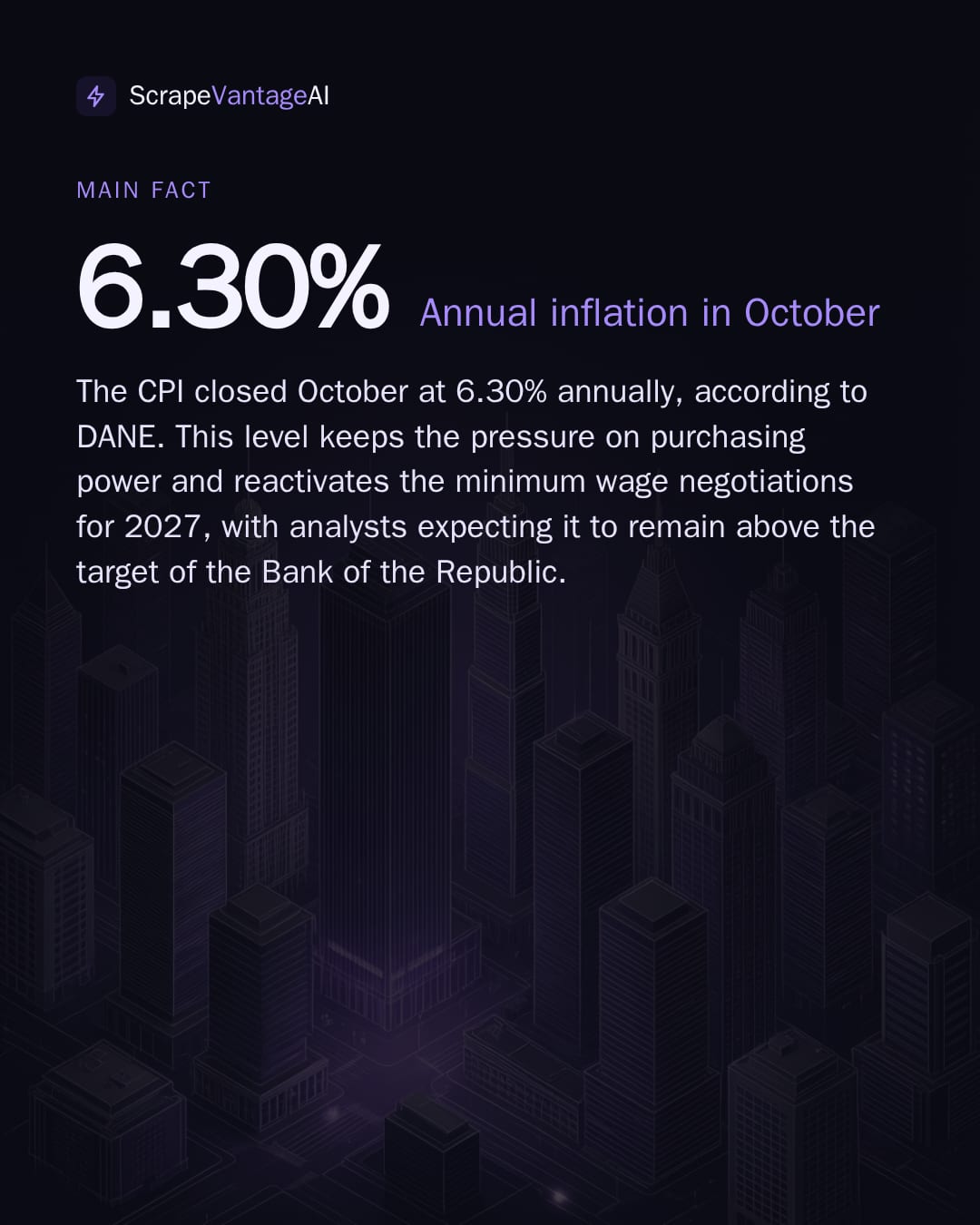
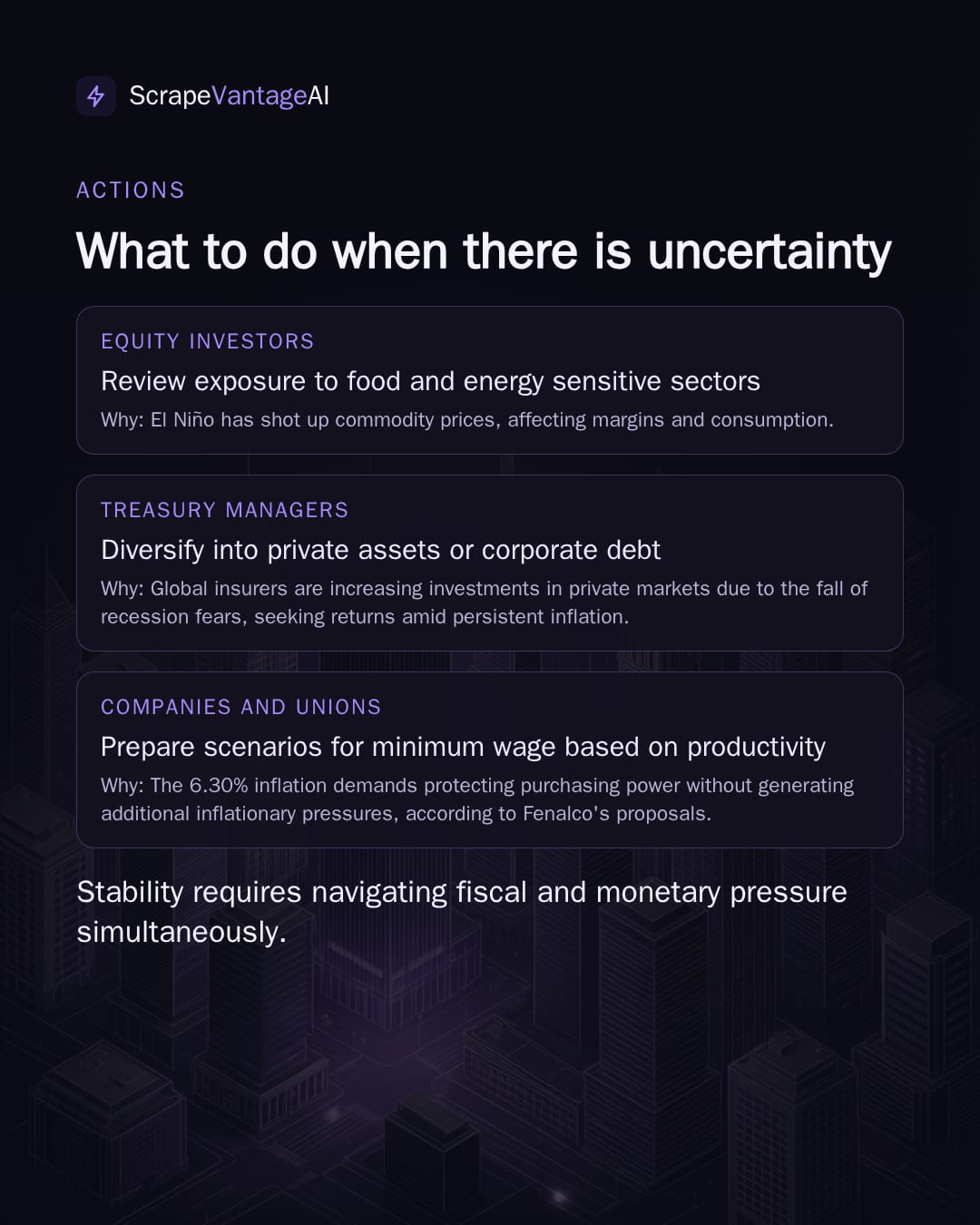
The CPI closed October at 6.30% annually, according to DANE. This level keeps the pressure on purchasing power and reactivates the minimum wage negotiations for 2027, with analysts expecting it to remain above the target of the Bank of the Republic.
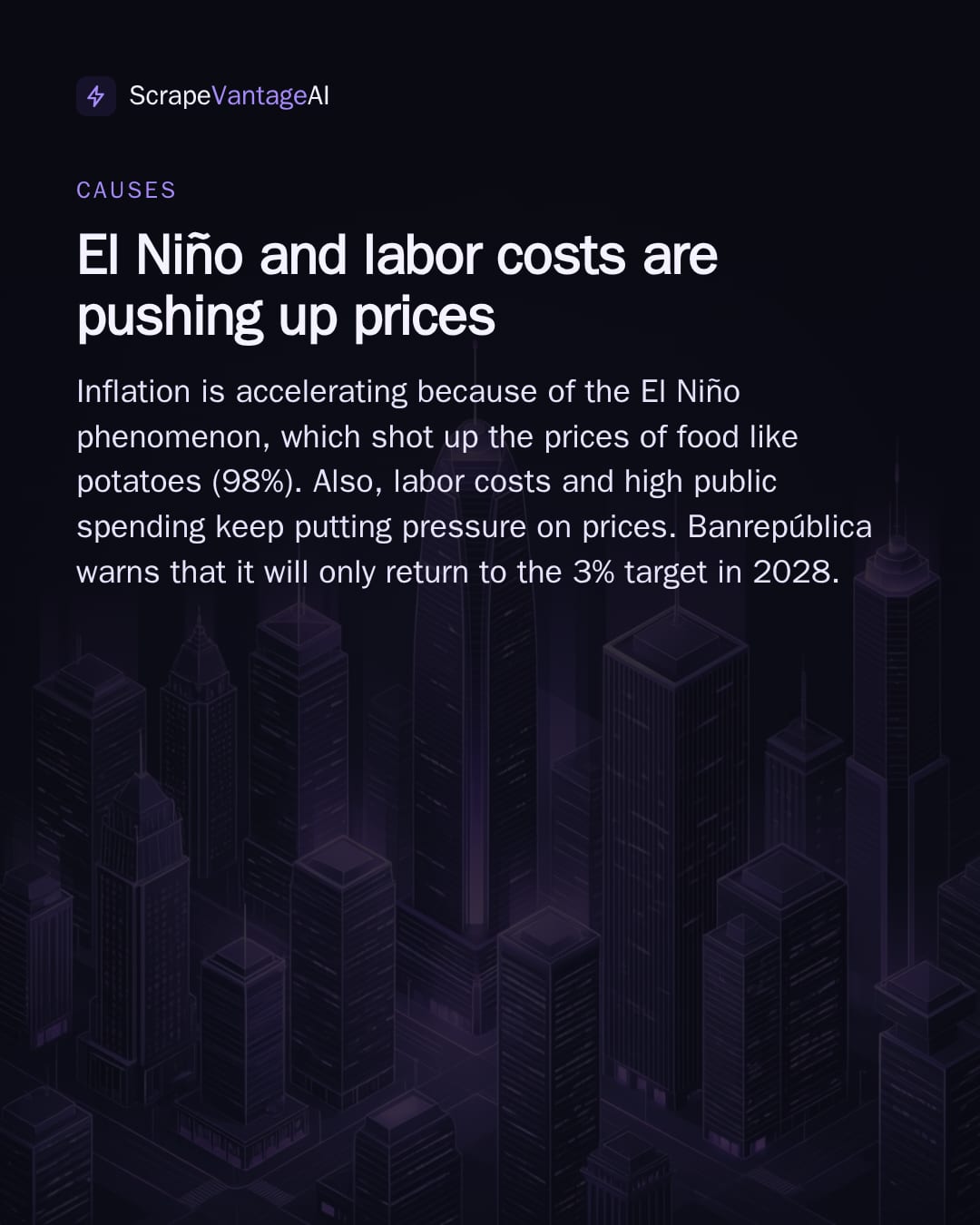
Inflation is accelerating because of the El Niño phenomenon, which shot up the prices of food like potatoes (98%). Also, labor costs and high public spending keep putting pressure on prices. Banrepública warns that it will only return to the 3% target in 2028.
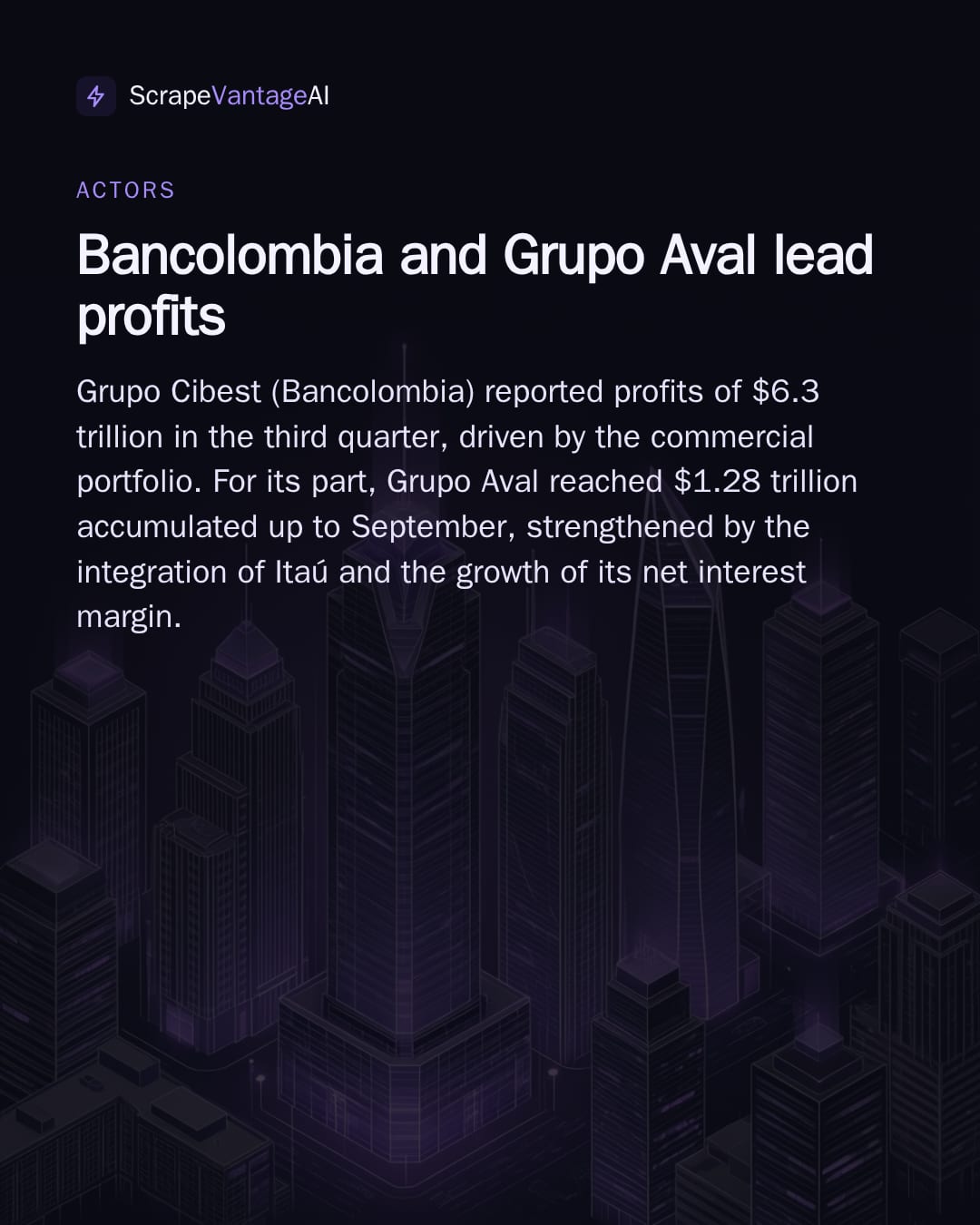
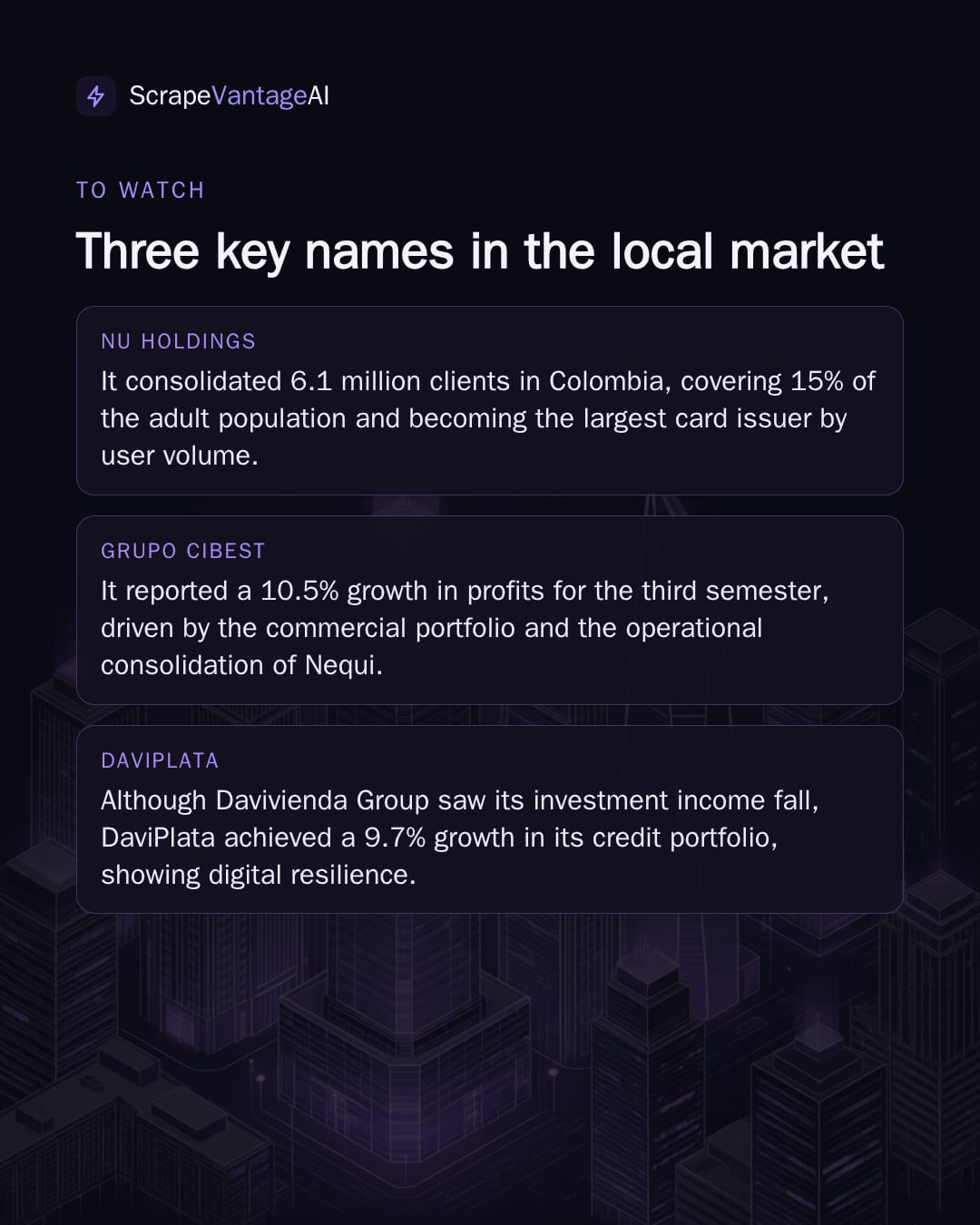
Grupo Cibest (Bancolombia) reported profits of $6.3 trillion in the third quarter, driven by the commercial portfolio. For its part, Grupo Aval reached $1.28 trillion accumulated up to September, strengthened by the integration of Itaú and the growth of its net interest margin.
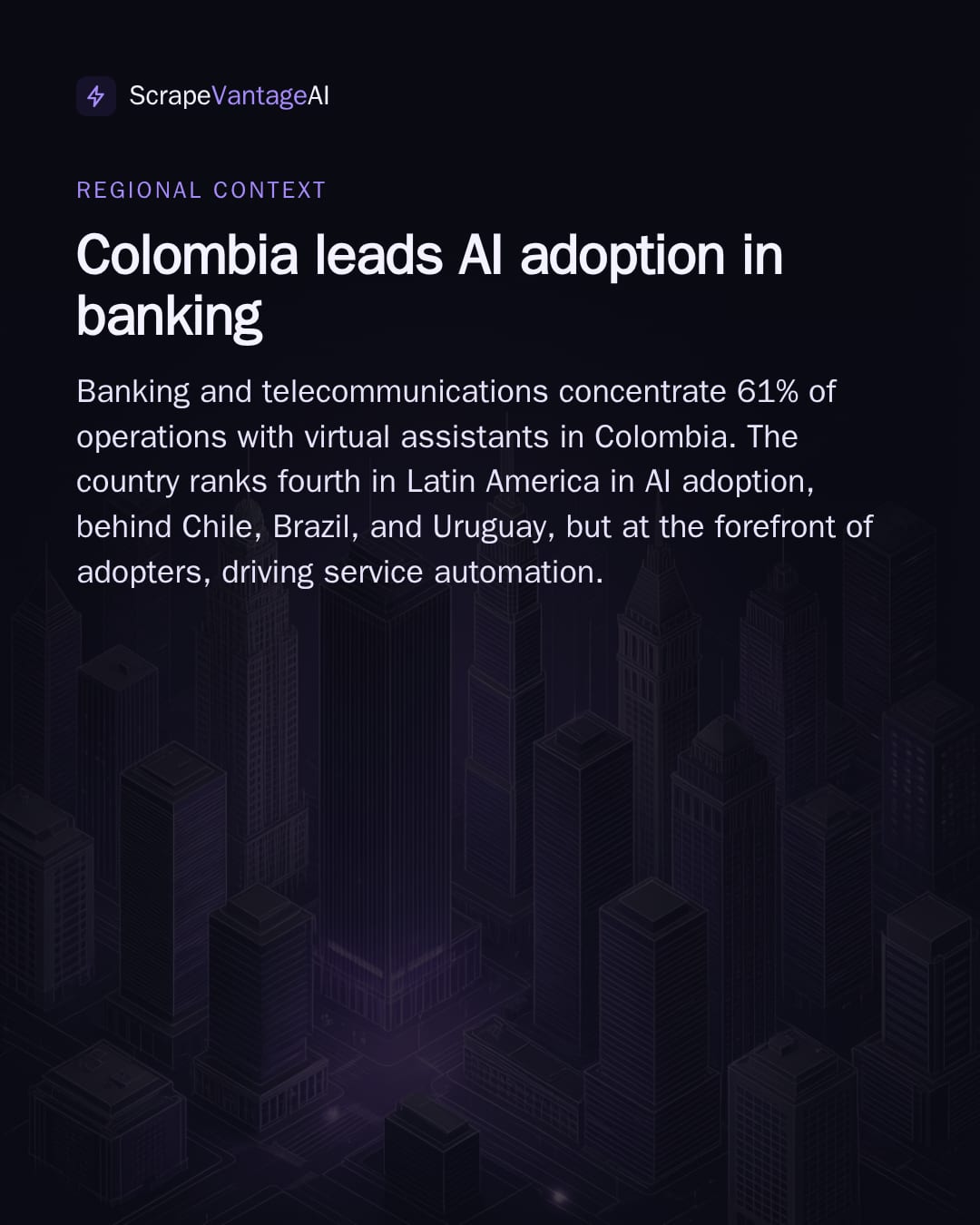
Banking and telecommunications concentrate 61% of operations with virtual assistants in Colombia. The country ranks fourth in Latin America in AI adoption, behind Chile, Brazil, and Uruguay, but at the forefront of adopters, driving service automation.
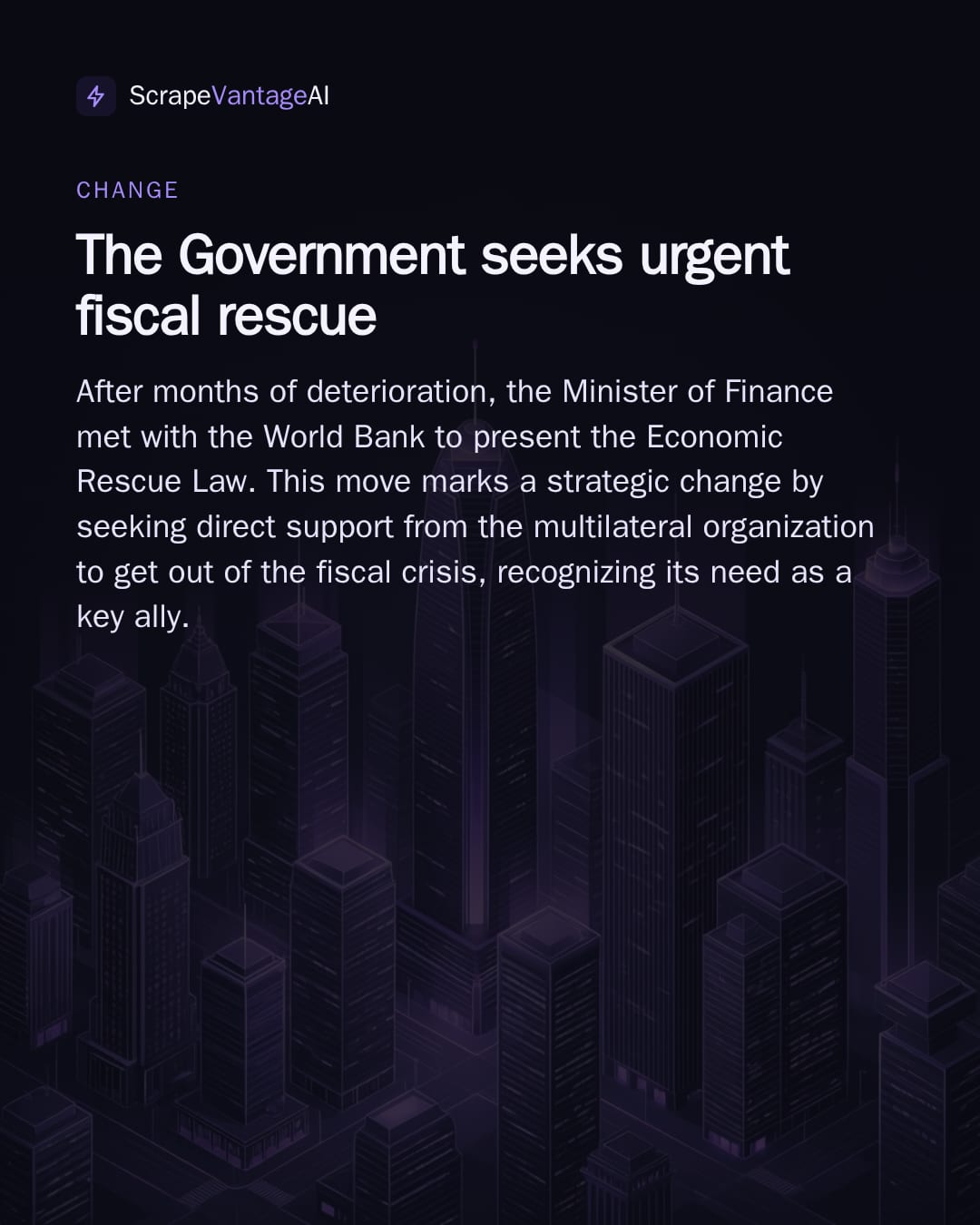
After months of deterioration, the Minister of Finance met with the World Bank to present the Economic Rescue Law. This move marks a strategic change by seeking direct support from the multilateral organization to get out of the fiscal crisis, recognizing its need as a key ally.
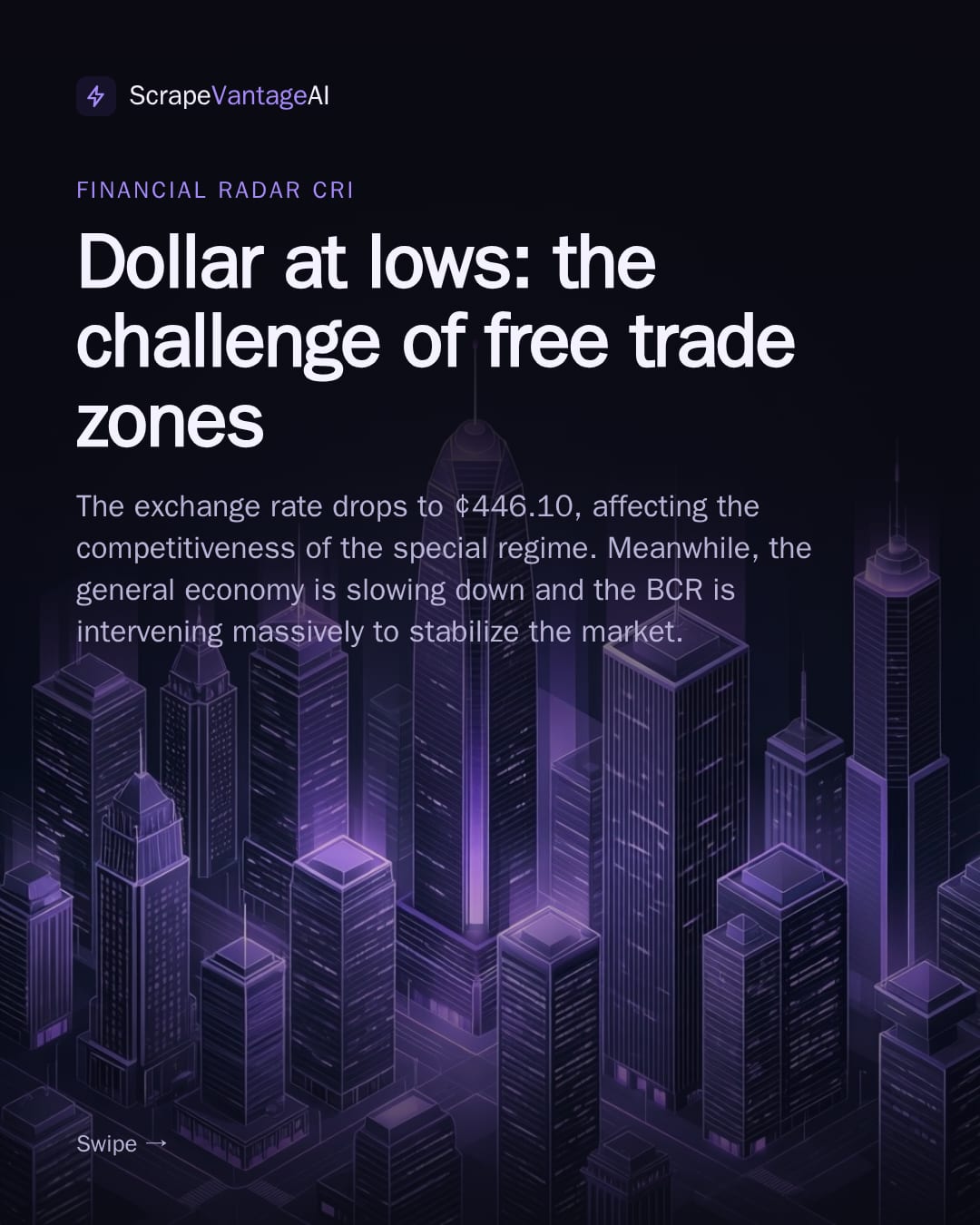
Dollar at lows: the challenge for free trade zones
1 / 10
Use the arrows, your keyboard or swipe. Tap a slide to enlarge it and read it better.
The key signal
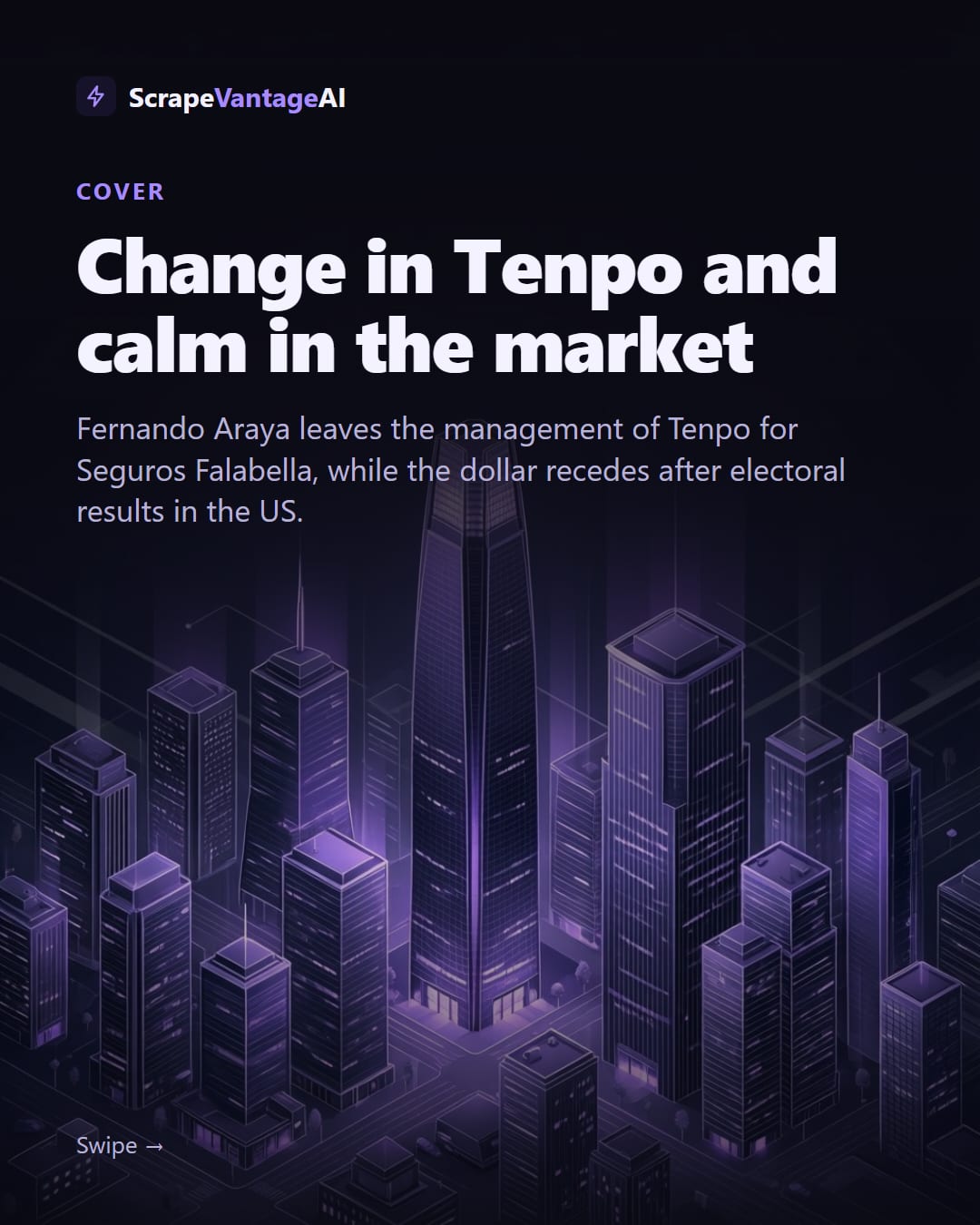
The US currency hits a historical low while the local economy shows deceleration and free trade zones lose competitiveness.
The key facts and their sources
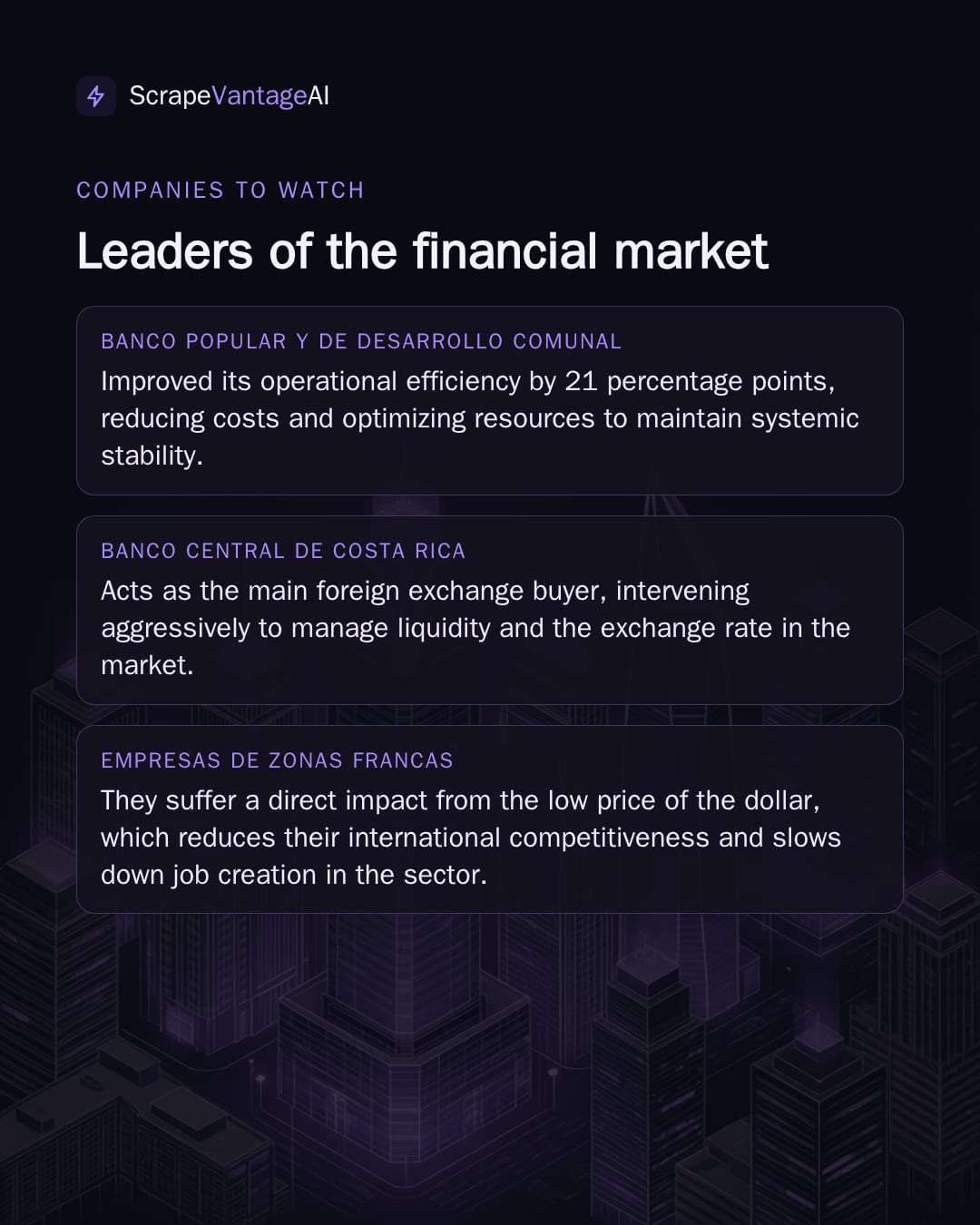
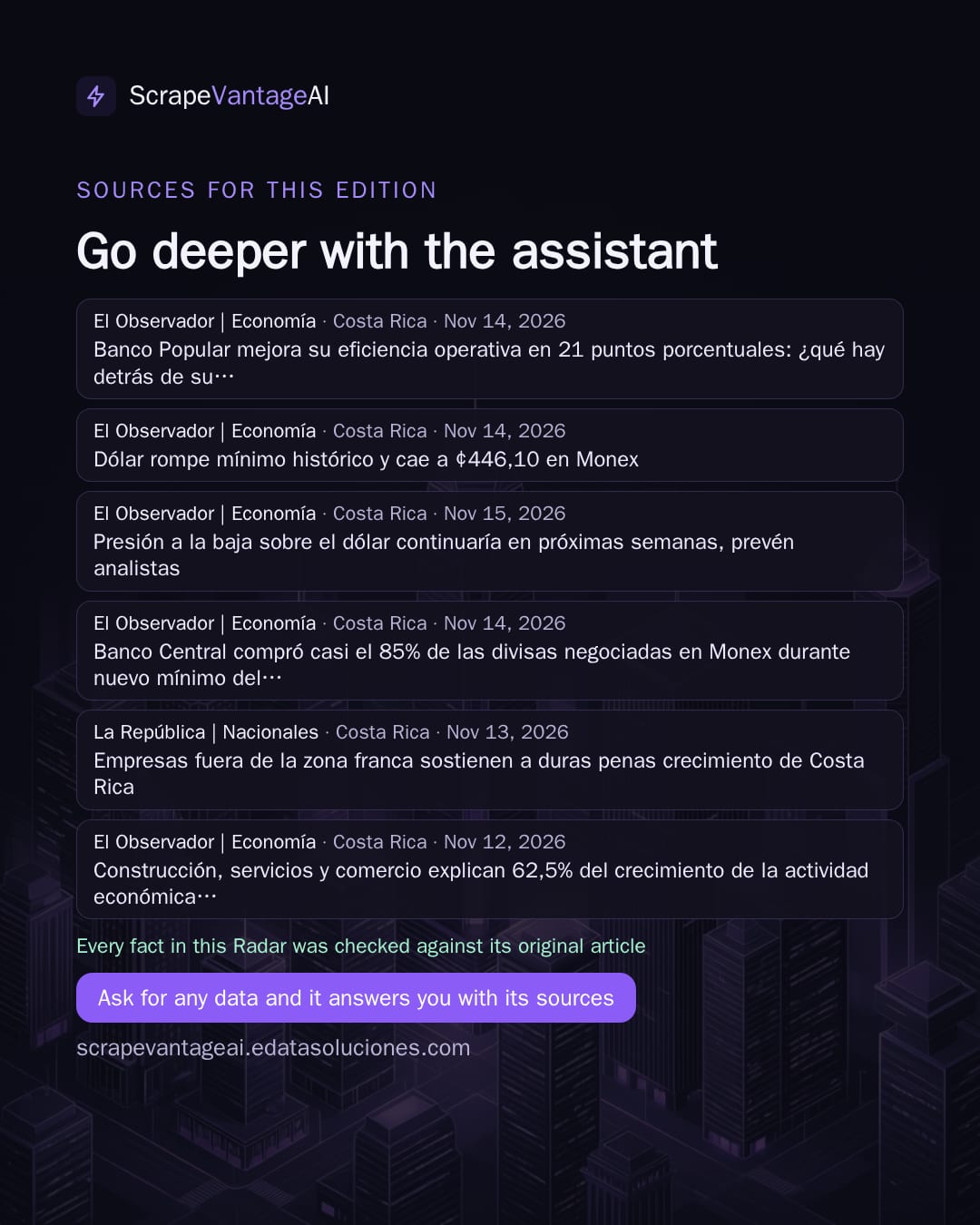
Banco Popular significantly reduced its operating cost, improving its financial structure. This digital and process transformation is key to maintaining profitability in an environment of tight margins.
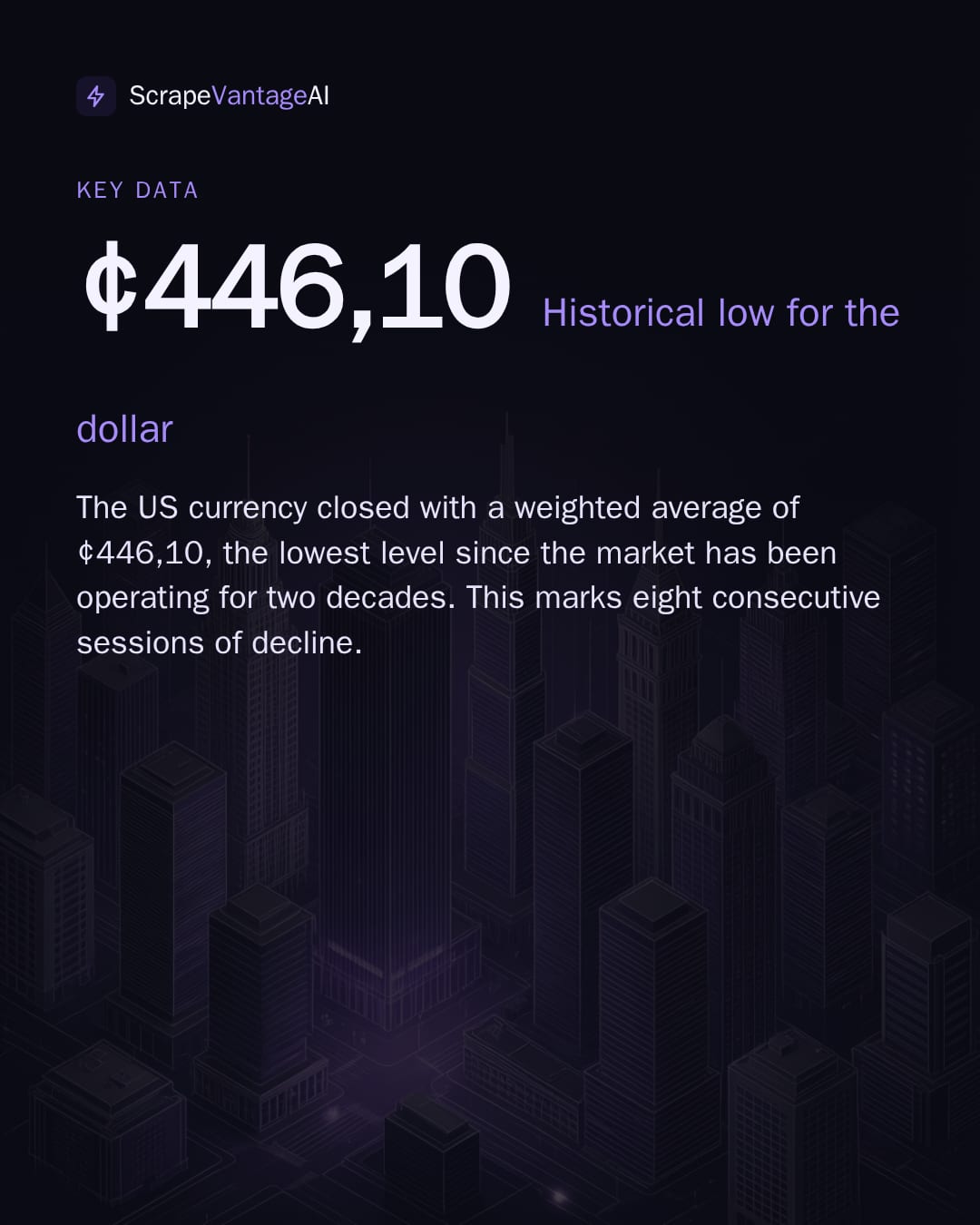
The US currency closed with a weighted average of ¢446,10, the lowest level since the market has been operating for two decades. This marks eight consecutive sessions of decline.
The downward pressure responds to a persistent abundance of dollars that greatly exceeds demand. Seasonal factors and the massive entry of foreign exchange by the public sector fuel this trend.
The Central Bank acquired $41.8 million in a single day, absorbing 84.8% of the volume traded. This massive intervention seeks to curb the accelerated depreciation of the local currency.
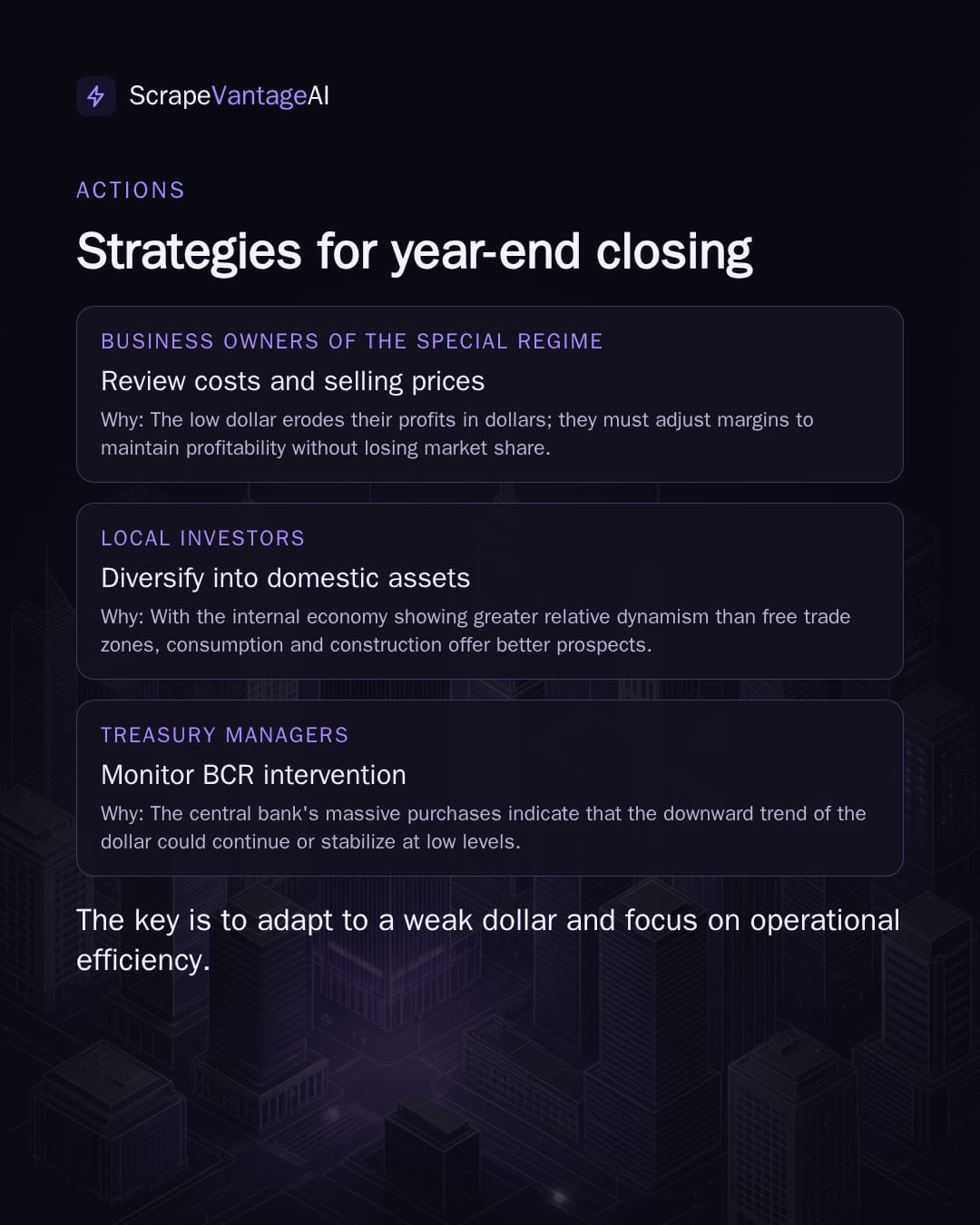
While the special regime is growing by only 0.6%, the definitive one is advancing by 3.3%. The slowdown in free zones contrasts with the resilience of the domestic market, where construction and services are leading.
The economy grew by 2.4% in September, but this represents a slowdown of 2.8 points compared to the previous year. The trend shows that the external engine is losing strength compared to the internal one.
They suffer a direct impact from the low price of the dollar, which reduces their international competitiveness and slows down job creation in the sector.
COL Finance: Fiscal Crisis, Inflation, and the Battle of the Giants
The key signal
The tension between the fiscal crisis, persistent inflation, and financial consolidation defines the week.
Carousel slides
1 / 10
Use the arrows, your keyboard or swipe. Tap a slide to enlarge it and read it better.
The key facts and their sources
Palomma raises US$14 million to consolidate itself as the bank of the real estate sector, led by Cometa. This fintech processes $1.5 billion annually in rent payments and seeks to expand its financial services in the region, breaking into a market dominated by traditional banking through artificial intelligence.
The CPI closed October at 6.30% annually, according to DANE. This level keeps the pressure on purchasing power and reactivates the minimum wage negotiations for 2027, with analysts expecting it to remain above the target of the Bank of the Republic.
Inflation is accelerating because of the El Niño phenomenon, which shot up the prices of food like potatoes (98%). Also, labor costs and high public spending keep putting pressure on prices. Banrepública warns that it will only return to the 3% target in 2028.
Grupo Cibest (Bancolombia) reported profits of $6.3 trillion in the third quarter, driven by the commercial portfolio. For its part, Grupo Aval reached $1.28 trillion accumulated up to September, strengthened by the integration of Itaú and the growth of its net interest margin.
Banking and telecommunications concentrate 61% of operations with virtual assistants in Colombia. The country ranks fourth in Latin America in AI adoption, behind Chile, Brazil, and Uruguay, but at the forefront of adopters, driving service automation.
After months of deterioration, the Minister of Finance met with the World Bank to present the Economic Rescue Law. This move marks a strategic change by seeking direct support from the multilateral organization to get out of the fiscal crisis, recognizing its need as a key ally.